Garden of the XXI Century
By: Basil Rutz -Worker at Schmelly’s Dirt Farm
I ascended the small slope from Lamanche St. to a lush 3,000 sqft plot in the Lower Ninth Ward while exclamations of pride bubbled out of the two stewards (volunteers) who had come to give me a tour.
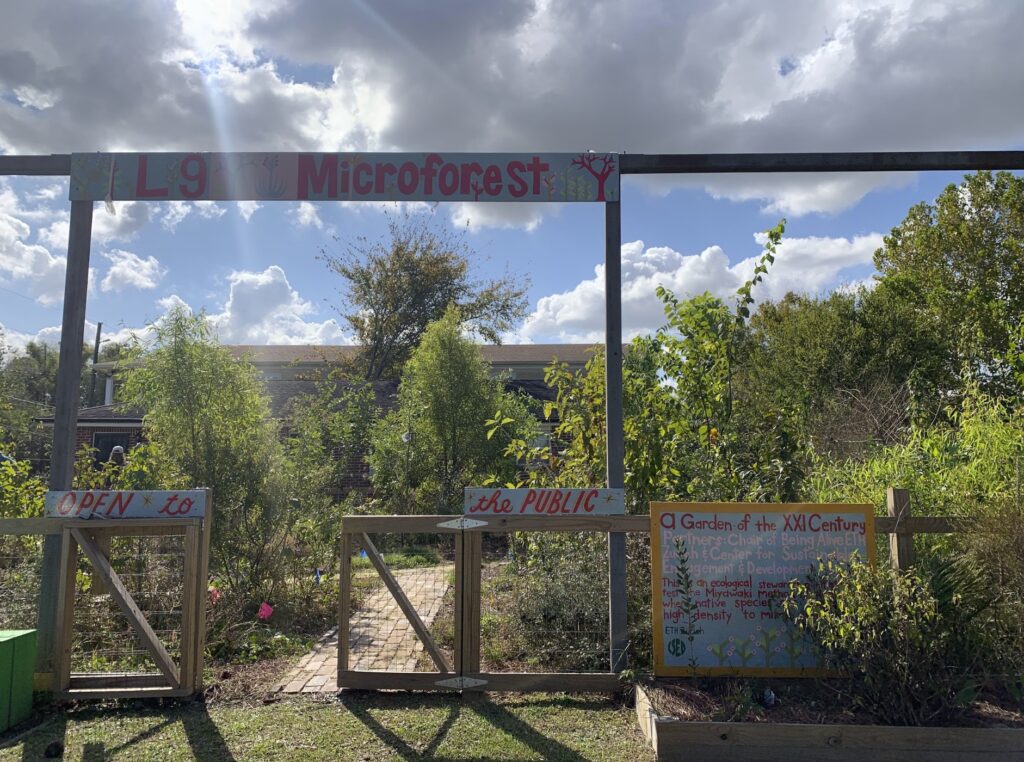
“Oh my god, they’ve grown so much!”
Zoe and Hannah admired the young trees that stood at least 3 feet above our heads, but were only planted as saplings one year ago. The Garden of the XXI Century welcomes all who may be curious to see the young urban forest, with its hand painted sign which reads, “Open To The Public.”
Knowing I fit into that category, I stepped inside this public haven, which, in a past life, existed as five individual housing lots. I took a moment to appreciate the rarity of a welcoming public space in a city that has, in many ways, been turned over to private ownership and locked gates within the last 50 years, particularly since development ramped up after hurricane Katrina.
This “microforest” utilizes the Miyawaki Forest Method, a Japanese technique that treats trees as a collective group of organisms; this method utilizes dense plantings of a diverse range of native species in nutrient rich soil to speed up forest maturation from centuries to decades.. New Orleans has a robust biomass capacity, and long growing seasons, making it an advantageous location for a regenerative land-based project that volunteers and other community partners can visit to witness tangible transformation. This project is intended to be one of several reforestation efforts in New Orleans after hurricane Katrina destroyed nearly 10% of the city’s tree cover. The site is in a location where New Orleanians lost their homes to the destruction of the hurricane, and it is at one of the lowest elevations in the city. It lies less than 100 metres from the closest levee which protects the city during regular 6-8 metre storm surges.
All this to say, the plot holds a lot of poignant history and climate-related vulnerability, which is in part why it was chosen for this project.
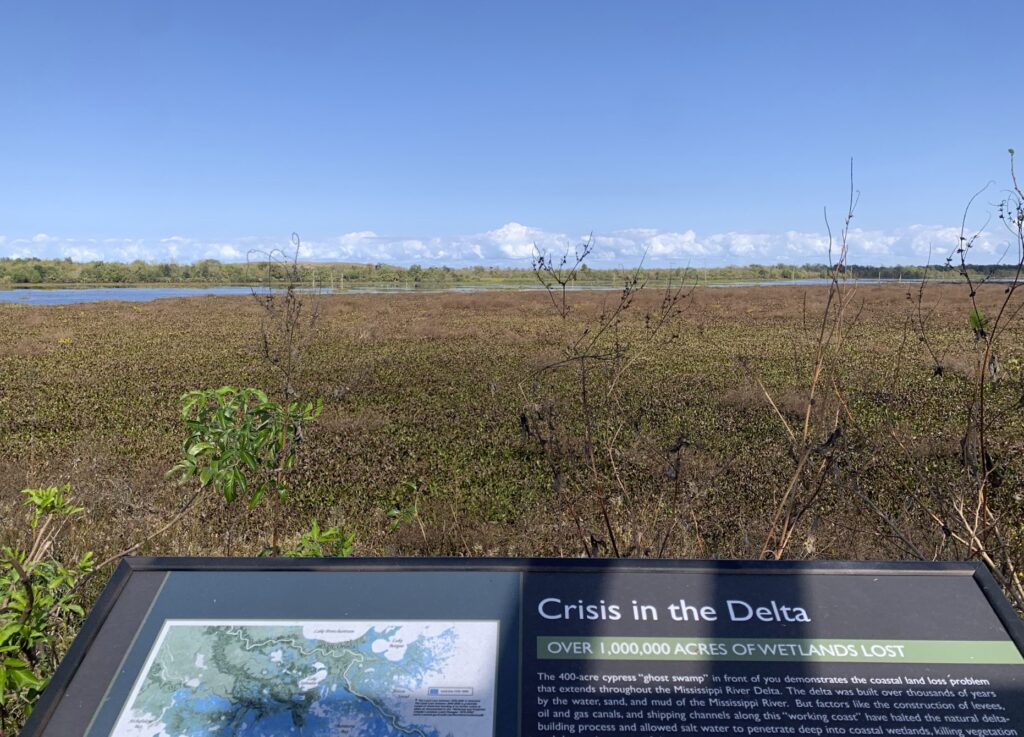
“Ghost Swamp” located on the other side of Lamanche, a result of coastal land lost to the Mississippi River Delta.
During the early stages of development in 2024, Bonnie Kate, landscape architect student with ETH Zurich, and the brains behind the forest project while still residing in New Orleans, decided to amend the soil with compost and aged mulch from Schmelly’s Dirt Farm. As a worker at Schmelly’s, I find this to be a wonderful real life metaphor for community connection and resilience. This microforest is an experiment on observing how trees grow together and develop resilience as a network, while their roots are being nourished by the product of alchemized waste produced by the people who live here. Bonnie Kate had the same sentiment when she chose to source her soil amendment from a local urban site. In addition to Schmelly’s, other notable partners in the actualization of this project are Rotglow Farm and Delta Flora Native Plants who both worked closely with the project leaders to develop the species list and propagate the trees by hand.
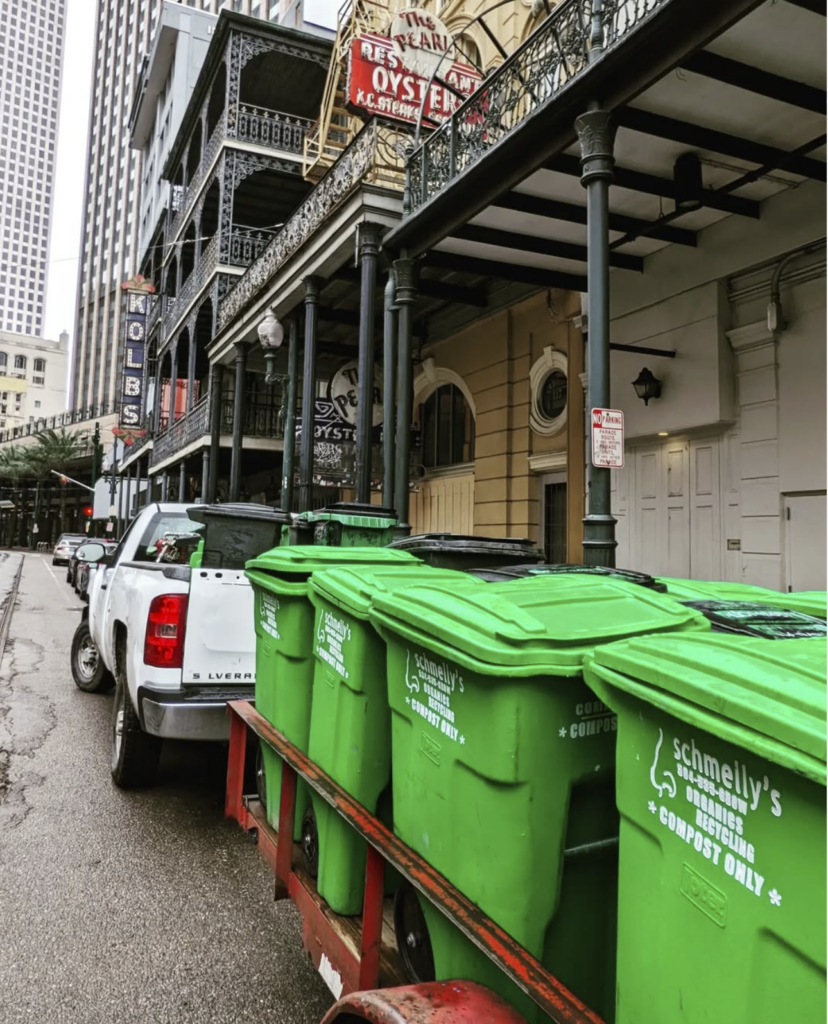
Schmelly’s collects organic waste from restaurants all around the city, from your 5-star Uptown Supper Club to French Quarter venues to the dog-friendly coffee shop. This waste that would otherwise become trash is being given a second chance to become nutrient rich fertilizer. When you set foot in the very welcoming Garden of the XXI Century, you are surrounded by the table scraps from someone’s celebratory meal, banana peels that had a few too many cheetah spots for the shelf, napkins that a toddler desperately needed during a trip to the bakery – all giving their bodies to the health and growth of the trees.
Community resilience looks like recognizing the value in land and matter that many would choose to discard or turn over to profit-focused industries, and collaborating to resurrect them into something beautiful and life-giving. Food waste often finds its way to the landfill where it integrates with plastics and other substances that take years to decompose; the waste becomes toxic sludge, oozing cancerous chemicals into the land and water, and releasing greenhouse gasses that weaken the ozone layer. But the composting community has decided to give waste another chance by transforming “garbage” into fertilizer.
The vacant lot that the Garden of the XXI Century was developed on could have easily been left as a slab full of rubbish or developed into an overpriced housing unit. Instead, it’s a public garden, its roots deepening inch by inch into a structural network that will support the land’s durability before the next storm. This discardable land and this discardable waste are sharing the invaluable task of creating and maintaining something every community needs: trees.
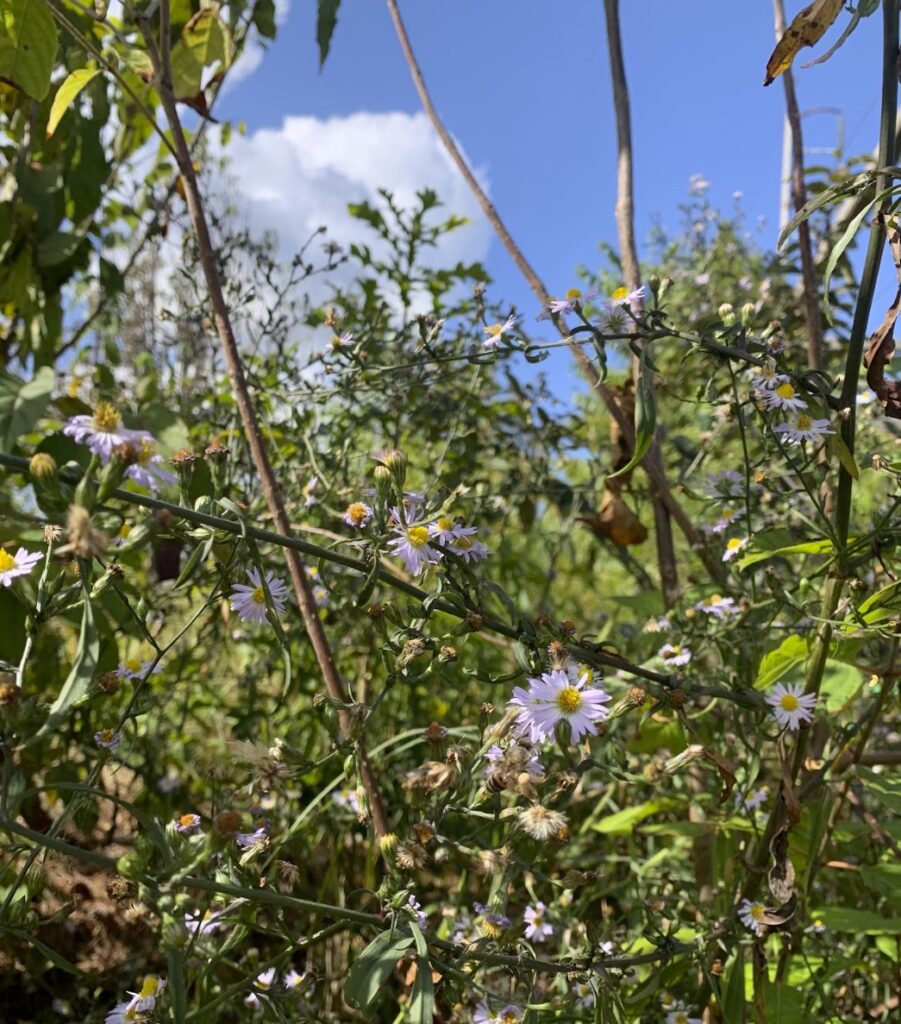
I recommend a visit to this public garden, where you can meander around a cozy plot of native trees, flowers and grasses, and encounter some harder to find species like toothache tree, mayhall, pumpkin ash, parsley hawthorne, and deciduous holly. With New Orleans’ robust growing and rainy seasons, you will bear witness to significant growth with each passing year, and perhaps gain a greater understanding of what it means to be a part of a resilient and hope-filled ecosystem.